Wedding Day Emergency Kit: The Complete Checklist for Brides
Tips and Trends | September 11, 2026

Wedding dress shopping is personal for every bride. And if you’re navigating changes in your body, including changes associated with a GLP-1 medication, you may have a few extra questions about when to shop, what size to order, and how to make sure your gown fits beautifully on your wedding day. Wedding dress shopping on a GLP-1 doesn’t have to feel complicated or stressful. We’re here to guide you through the process and help you make decisions that work for your wedding, your body, and your priorities.
There’s no single “right” way to approach bridal shopping. Your body does not need to be on a particular timeline for you to deserve a wedding dress you love. When you’re ready to begin the process of saying yes to your dream dress, one of our Authorized Boutiques can help you navigate it with expert guidance and personalized recommendations.
One of the biggest considerations when wedding dress shopping on a GLP-1 is timing. Not because there is a universal timeline for body changes (there isn’t) but because wedding gowns are ordered, produced, delivered, and altered on their own schedule that must be taken into consideration.
Maggie Sottero generally recommends beginning the wedding dress process about 9–12 months before the wedding to allow enough time for gown delivery and alterations. That timeline can give you more flexibility if your body is changing between the time you order your gown and your wedding day.
For a deeper look at the traditional bridal shopping timeline, explore these wedding dress shopping tips. You’ll find guidance on everything from booking your appointment to choosing a gown, considering delivery windows, and planning alterations.
If your wedding is closer than a year away, don’t panic. Wedding dress shopping while losing weight or experiencing other body changes may simply require a little more planning around your gown’s availability. Maggie Sottero offers a selection of Quick Ship wedding dresses designed for brides who need a faster delivery timeline. You can also learn more about the process and benefits of Quick Ship wedding dresses on our blog.
Alongside the regular timeline considerations for ordering a gown, there are a few more things to consider if you are wedding dress shopping while losing weight.
A wedding gown is not the same as a standard piece of clothing that you can easily replace or size up at the last minute. Bridal gowns are constructed with specific proportions, seams, linings, boning, lace placements, beading, and other design details.
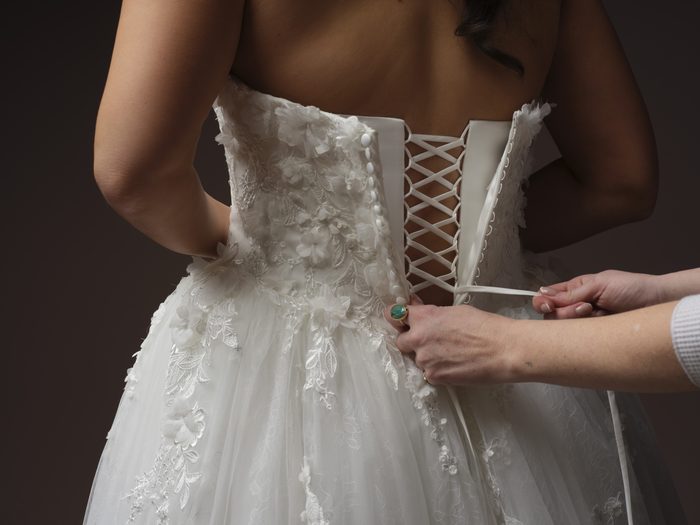
Alterations can often make a gown smaller or adjust certain areas for a better fit. However, there are limits to how dramatically a gown can be resized, particularly when the difference is significant or when a design has intricate construction.
That’s why your stylist should know about any circumstances that could affect your expected fit. This doesn’t mean you need to predict exactly what your body will look like on your wedding day. Instead, it gives your bridal team important context when discussing gown sizing, delivery timing, alterations, and available options.
You never owe anyone an explanation for your body, your health choices, or your medical care. But we would encourage you if you’re taking a GLP-1, or if your measurements may change before your wedding, to share that with your bridal stylist. This will help them give you more relevant advice. Which is what they’re there for!
A GLP-1 bridal appointment is still a bridal appointment first. You’re there to explore gowns, discover what makes you feel beautiful, and have fun. The difference is simply that your stylist may have additional information to consider when helping you plan your purchase and alterations.
For example, your stylist may recommend discussing:
That’s why we always recommend working with one of our tried and true Authorized Boutiques for help with availability, delivery timelines, sizing, accessories, and alterations.
You can find an Authorized Boutique near you and let your stylist know whatever information feels relevant to your shopping experience.
And remember: you don’t have to have every answer before your appointment. That’s what your bridal team is there for.
For some brides, wedding dress shopping on a GLP-1 may bring up some complicated feelings about body image. Trying on a wedding gown can make anyone hyper-aware of their reflection, and conversations about sizing or measurements can sometimes feel more emotionally loaded than expected.
Give yourself permission to have a different experience.
Your wedding dress is not a reward for reaching a particular body size. And it certainly isn’t something you need to earn. Your gown is there to celebrate you and your unique love story.
That might mean choosing a dress that fits your current body beautifully. It might mean choosing something with room for potential changes. Both of those choices are valid.
Our guide to maintaining a positive body image at your bridal appointment encourages brides to focus on feeling confident and finding a gown that makes them feel beautiful rather than getting caught up in unrealistic beauty standards. We’d recommend every bride give it a read!
The same philosophy applies when choosing a silhouette. Instead of asking, “What dress will make me look the most…?” consider asking:
Maybe that’s a dramatic ballgown or an effortless A-line. Maybe you’ve always dreamed of a fun, fitted silhouette. Your priority could be comfort, movement, sleeves, pockets, a statement train, or a particular neckline.
There is no universal definition of the perfect bridal body, just like there isn’t a universal definition of the perfect wedding dress.
For more inspiration, Maggie’s guide to finding the perfect dress for your body type can help you explore silhouettes while keeping the focus on your personal style and preferences.
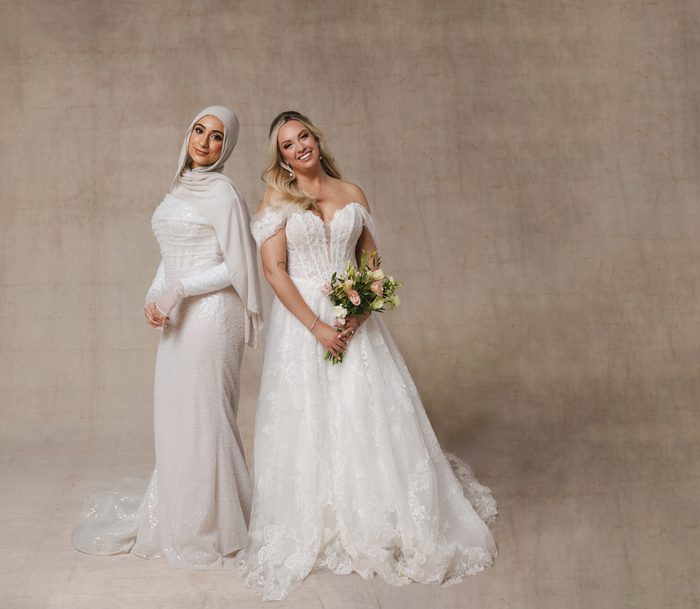
If you’re wedding dress shopping on a GLP-1, it can be helpful to arrive with a few questions prepared. You don’t need to have a detailed plan for every possibility. Think of these questions as conversation starters that can help you and your stylist build a realistic timeline together.
Ask your stylist about the expected production and delivery timeline for the gowns you’re considering. A standard gown may require more lead time, while a Quick Ship style may offer more flexibility.
If your wedding date is approaching or you simply want more flexibility, ask about Quick Ship wedding dresses. Your stylist can help you understand which available gowns may work for your date.
Bridal sizing is different from everyday clothing sizes, and your stylist can help you determine which size makes the most sense based on your measurements and the gown’s construction. This can be especially helpful if you anticipate your measurements changing between your appointment and wedding day.
Some gowns offer personalization options that can help make the design work better for your preferences. Ask your stylist what is available for the specific gown you love, from changes to length and train details to other available design options.
Ask when your gown is expected to arrive, when alterations should begin, and what adjustments may be possible for your specific gown. A skilled bridal seamstress can explain how much the gown can realistically be taken in or adjusted and help you plan your fittings around your wedding date.
Ask about storage, hanging, steaming, transportation, and anything else you should know once your gown arrives. A little preparation can go a long way toward keeping your dress wedding-day ready.
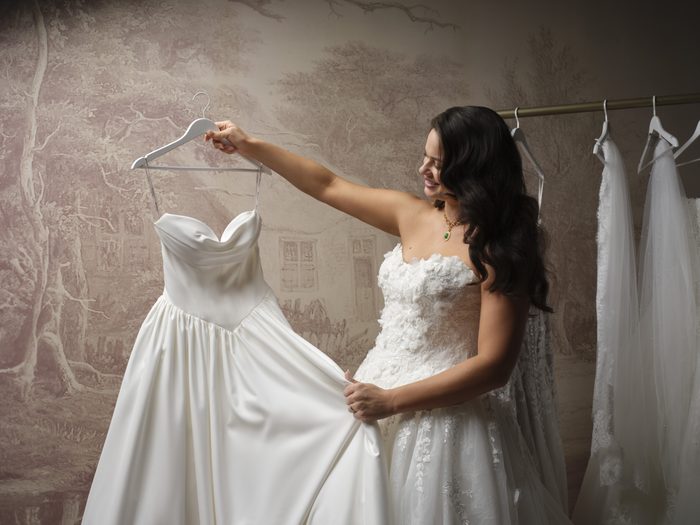
Ultimately, wedding dress shopping on a GLP-1 isn’t about predicting your future body. It’s about creating a bridal shopping experience that encourages you to love yourself and your dress in your bridal appointment and on your wedding day, no matter what happens in-between.
There is no requirement to change your body before wedding dress shopping, to pursue weight loss, to stop a medication, change a treatment plan, or make a decision based on anyone else’s expectations. Those are deeply personal choices that belong between you and your healthcare providers.
Your wedding dress can simply be part of the celebration.
Choose the gown that makes your heart race when you see yourself in the mirror. Tell your stylist whatever information is relevant so they can give you the best advice possible. Ask questions about sizing, delivery, alterations, and customization. Give yourself enough time when possible, and explore flexible options when you need them.
Most importantly, let your dress celebrate the person standing in front of the mirror, not a specific number, size, or a version of yourself you think you’re supposed to become.
Ready to start? Find an Authorized Boutique and connect with a bridal stylist who can help you create a wedding dress shopping plan that feels right for you.
How to Buy a Maggie Sottero Wedding Dress: Your Step-By-Step Guide
Wedding Dress Size Chart: How to Measure for Your Wedding Dress