Boho Floral Wedding Dresses: 2027’s Dreamiest Gowns
Dresses | October 22, 2026
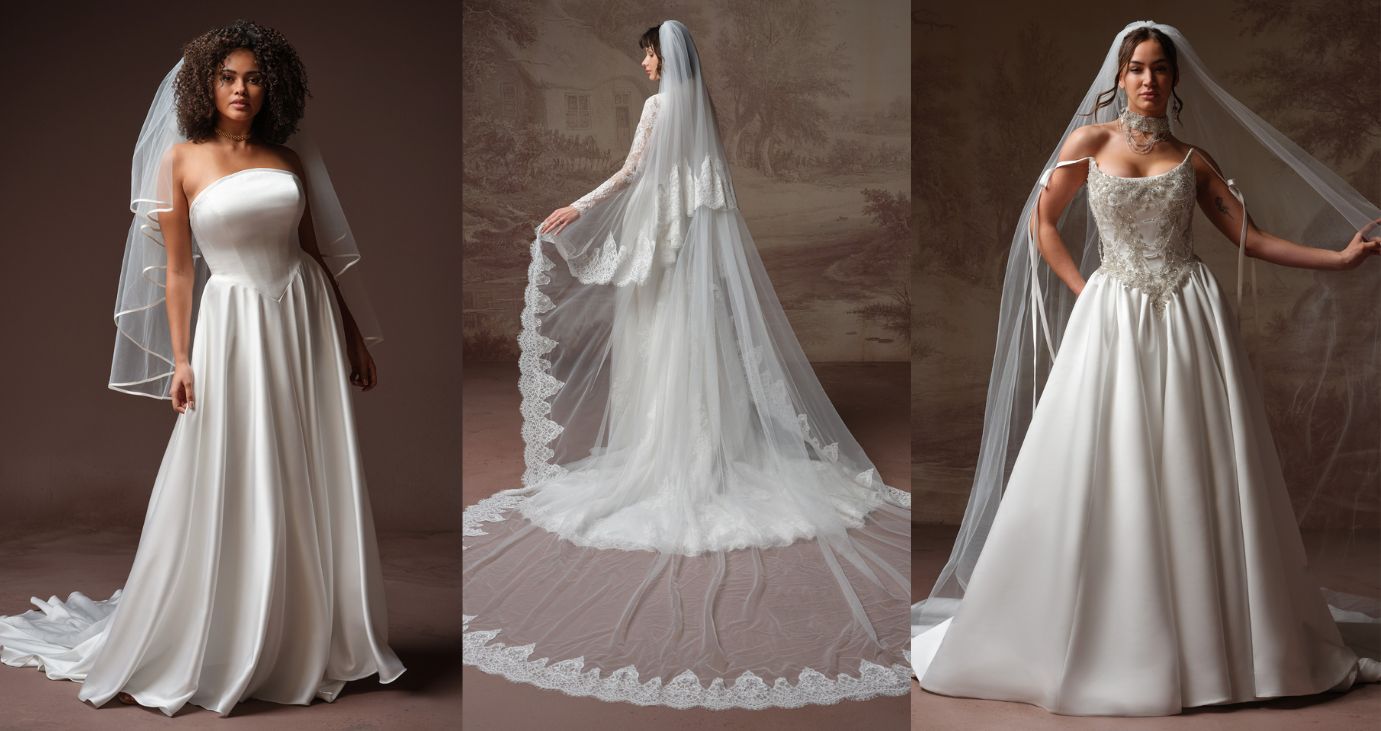
The right veil can transform your bridal look, adding softness, drama, or a little extra romance to your wedding-day style. But with so many wedding veil lengths to choose from, how do you know which one will work best with your dress, hairstyle, height, and venue? The good news is that finding your perfect match doesn’t have to be complicated.
Whether you’re dreaming of a dramatic cathedral veil or a delicate fingertip style, understanding the basics will help you narrow down your options. The next step? Booking your bridal appointment with one of our Authorized Boutiques.
If you’re comparing wedding veil lengths, a size chart is a great place to start. Different lengths create different effects, from understated and effortless to grand and romantic. Use this wedding veil length chart as a general guide to the most popular options.
| Veil Length | Approx. Length | Where It Falls | Best For |
|---|---|---|---|
| Fingertip | 36–46″ | Near the fingertips with arms relaxed | Almost any dress and venue |
| Chapel | 90–110″ | Just past the floor | Classic ceremonies and a soft sweep |
| Cathedral | 108–120″ | Well past the train | Aisles, churches, and formal venues |
| Royal | 120–160″+ | Extends far beyond the train | Grand entrances and long aisles |
Keep in mind that these measurements are approximate. Veil lengths are measured from where the comb sits in your hair to the end of the fabric, so the same veil may fall differently depending on your height, hairstyle, and comb placement. Your wedding gown’s silhouette and train can also influence how the finished look comes together.
What about a blusher? Some veils feature an additional short layer that can be pulled over the face for the ceremony. This is called a blusher, and it’s a design feature rather than a separate veil length. You can find blushers paired with different veil styles, depending on the look you want.


Once you’ve narrowed down your favorite wedding veil lengths, it’s time to figure out where your veil will actually fall. A few measurements can help you visualize the proportions, but working with an experienced bridal stylist is especially helpful when you’re coordinating your veil with your dress and hairstyle.
We recommend visiting an Authorized Boutique for help finding a veil that works with your overall bridal look. In the meantime, here’s how to get a helpful starting measurement.
Remember that measuring at home is a starting point, not a substitute for trying the veil on with your gown. Your bridal stylist can help you check the length, adjust the comb placement, and make sure the veil complements your dress from every angle.


Height can influence how bridal veil lengths appear, but it shouldn’t determine which styles you’re allowed to wear. A petite bride can absolutely wear a cathedral veil, and a tall bride can look stunning in a fingertip style. The key is understanding how each length interacts with your proportions and the look you’re hoping to create.
On a petite frame, a fingertip veil may fall a little lower than expected, closer to the mid-thigh area depending on the bride’s proportions and comb placement. Fingertip and chapel styles can both create balanced proportions, while cathedral and royal veils add a dramatic trail that can feel especially striking against a longer gown.
If you’re petite, don’t feel obligated to choose a shorter veil just because of your height. Think about the overall silhouette, the length of your dress’s train, and whether you want your veil to blend into the look or make a statement. For more gown-shopping guidance, explore our petite wedding dress guide.


If you’re of average height, the chart above is a helpful starting point for comparing wedding veil lengths. Fingertip veils generally offer a versatile middle ground, while chapel, cathedral, and royal lengths provide progressively more trailing fabric.
Still, your height isn’t the only factor. A fuller skirt, fitted silhouette, or dramatic train can change the way a veil looks from head to toe. Try a few lengths with your gown before making your final decision.


On a taller bride, a fingertip veil may land higher on the hip rather than near the fingertips. Chapel, cathedral, and royal veils can provide additional length if you’re hoping for more coverage or a sweeping train effect.
That doesn’t mean you need a long veil, though. A shorter style can create a fresh, modern contrast with a floor-length gown, and a longer veil can be beautiful at any height. Choose based on the overall effect you want rather than a rule about proportions.


Comb placement can matter just as much as height. Moving the comb higher or lower shifts where the veil ends and changes how it frames your hairstyle and dress. This small adjustment can make a noticeable difference when you’re comparing veil sizes.
For additional gown-fit guidance, take a look at our wedding dress size chart. And if you’re looking for an affordable finishing touch, the Essentials Edit offers veils in many lengths, making it easier to find a style that suits your vision and budget.


Your venue can help you decide which veil length feels right for the occasion. Consider the setting, the aisle, and how much room you’ll have to move before choosing between shorter, more practical styles and longer, statement-making options.
Whatever your venue, remember that practicality and personal style can coexist. If you love a long veil but worry about navigating a crowded reception, you can wear it for the ceremony and portraits, then remove it when it’s time to dance.
Pro tip: Ask a bridesmaid, your mother, your sister, or a trusted friend to be your designated veil helper. After you walk down the aisle, they can gently spread and fluff the fabric before portraits so it looks its best. A quick adjustment can help your veil fall beautifully in photos without adding stress to your wedding day.


Bobby pins can help stabilize a veil, especially when they’re matched to your hair color and placed discreetly. Your hairstylist can determine the best pin placement for your hair texture, the weight of your veil, and the style you’re wearing. Avoid relying on a single pin to support a heavy veil; a secure attachment should feel comfortable without pulling on your hair.
If you plan to wear your veil all day, practice walking, turning your head, and sitting with it in place before the wedding. You’ll get a feel for how it moves and whether anything needs adjusting.
And remember: your hairstyle doesn’t have to dictate your veil choice. Whether you’re planning a polished bun, romantic waves, or a sleek ponytail, the right combination of hairstyle and veil should complement your personal style and make you feel confident.


The best wedding veil lengths are the ones that make you feel beautiful, comfortable, and completely yourself. Use the chart as a starting point, then consider your gown, height, hairstyle, and venue to find a combination that brings your bridal vision together. You don’t have to follow a rulebook to get the look right.
Ready to find your finishing touch? Explore our collection of wedding veils to discover the length and style that feel just right for your walk down the aisle.
The Best Detachable Wedding Dress Accessories for a Custom Bridal Look